

El "mensaje contradictorio" en torno a la manufactura estadounidense
Los aranceles, los incentivos fiscales y el aumento de la productividad están remodelando el panorama industrial de Estados Unidos
Lectura de 6 minutos
PUNTOS CLAVE
- Los aranceles están elevando los costos a corto plazo, mientras que los incentivos fiscales tomarán tiempo para traducirse en una mayor capacidad de fabricación y empleos en los Estados Unidos.
- Las ganancias de productividad, especialmente a medida que la IA se expande, significan que la producción se ha mantenido estable a pesar de décadas de pérdidas de empleos.
- La relocalización de la manufactura podría fortalecer la resiliencia económica, pero también podría mantener la inflación y las tasas de interés más altas.
Se ha hablado mucho del impacto de la globalización en el número de empleos de manufactura en los Estados Unidos. Sin duda, el movimiento para buscar mano de obra de menor costo en el extranjero, una tendencia acelerada por la entrada de China en la Organización Mundial del Comercio en 2002, jugó un papel importante en el cierre de las instalaciones de fabricación en varias industrias. Una parte clave de los cambios en la política comercial de la administración actual es un esfuerzo por traer la manufactura y sus empleos de regreso a los Estados Unidos.
Actualmente tenemos un enfoque de "zanahoria y palo" para el tema. El palo son los aranceles que se aplican a las importaciones, mientras que la zanahoria son los cambios en la política fiscal que incentivan a las empresas a realizar inversiones de capital en la fabricación con sede en Estados Unidos. La parte difícil es que hay una diferencia de tiempo entre el impacto del palo y el beneficio de la zanahoria. Si bien el Índice de Precios al Consumidor (IPC) de octubre y noviembre proporcionó señales de que los aumentos de precios de los aranceles han sido menores de lo que se temía, la realidad es que la inflación podría caer aún más rápido sin ellos. Persisten los problemas de asequibilidad derivados de la inflación agregada desde el inicio de la pandemia. Al mismo tiempo, incluso con anuncios de miles de millones de dólares en inversiones, pasarán meses, e incluso años, antes de que se construyan nuevas plantas y equipos y estén listos para contratar nuevos trabajadores.
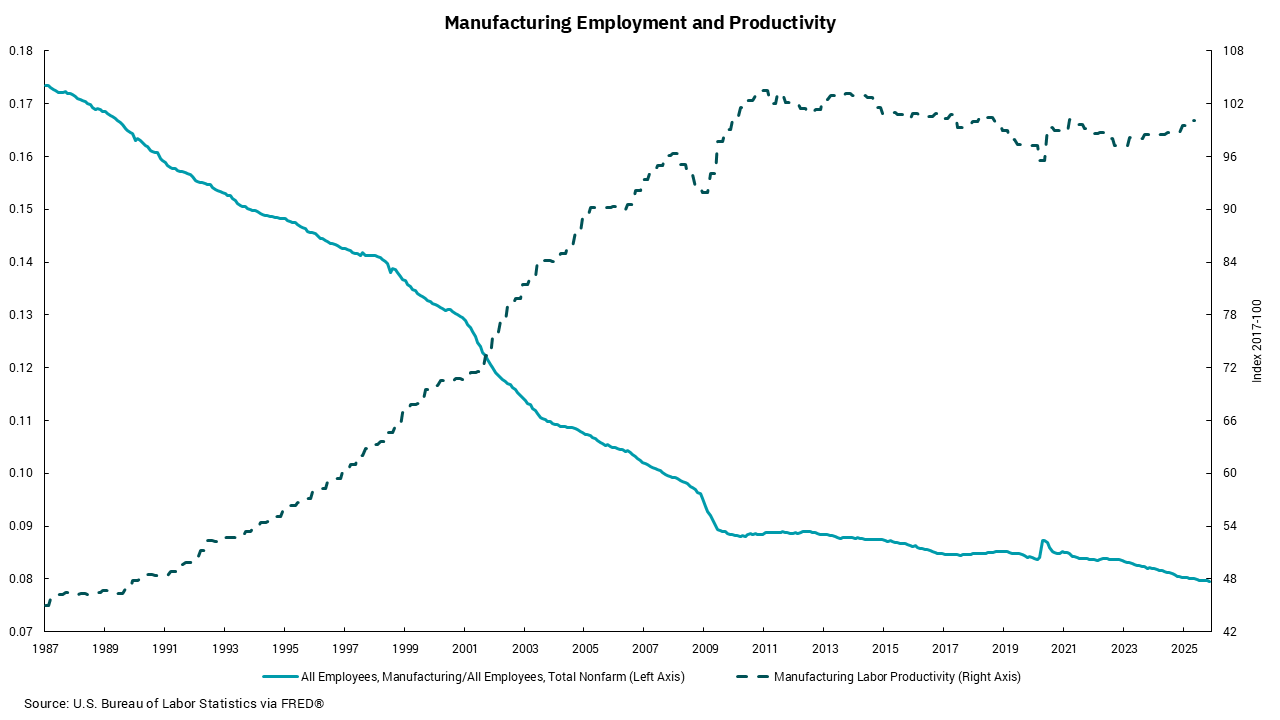
Más allá del impacto en los empleos dentro del sector manufacturero de los Estados Unidos, otra tendencia masiva ha estado en marcha: el aumento de la productividad, y puede acelerarse aún más a medida que la inteligencia artificial (IA) se convierta en una parte más importante de la economía de los Estados Unidos. A pesar de cierto aplanamiento de las ganancias en los últimos años, nuestro gráfico de esta semana muestra las ganancias materiales en la productividad desde mediados de los años ochenta. Aunque hubo pérdidas significativas de empleos durante ese período, la producción manufacturera se ha mantenido relativamente estable. Esto no significa que el cambio en los empleos a nivel mundial no haya tenido algunos aspectos negativos en la economía de los Estados Unidos y sus trabajadores. De hecho, las ganancias en la productividad podrían significar que la producción manufacturera sería significativamente mayor y el crecimiento de la productividad interna bruta (PIB) sería potencialmente mejor si esta deslocalización no hubiera ocurrido. Al mismo tiempo, la globalización ha sido un factor en la disminución de las presiones inflacionarias y el largo período de inflación baja y constante desde mediados de los años noventa.
Este mensaje mixto podría continuar a medida que hagamos cambios de política para traer más manufactura de regreso a los EE. UU. El crecimiento del empleo podría ser mejor, positivo, pero los costos generales para los productores podrían ser un poco más altos, lo que significa que las tasas de inflación podrían establecerse en niveles algo más altos. Esto podría llevar a que la Reserva Federal mantenga las tasas un poco más altas de lo que estamos acostumbrados, y las tasas de consumo, como las hipotecas, también se mantengan más altas. Covid reveló los riesgos de deslocalizar gran parte de nuestra capacidad de producción. Los aranceles están actuando como un acelerador de la tendencia ya vigente desde la pandemia. Nuestra sensación es que llegaremos a un punto en el que entenderemos que no queremos que todos los trabajos de manufactura regresen a los Estados Unidos, pero claramente hay algunas áreas donde un mejor control de la producción y la distribución, en una palabra, resiliencia, es un beneficio por el que vale la pena pagar.
Obtenga By the Numbers en su bandeja de entrada.
Suscríbase (Se abre en una pestaña nueva)